When it comes to hydraulic hose routing for high-pressure rubber or thermoplastic hose assemblies, close enough isn’t good enough.
Every hydraulic hose application requires a specific hose.
Hydraulic Hose Routing Best Practices
Many factors play a role in the life of hydraulic hose assemblies. These can include: hose routing, bend radius, relative motion and environmental/application conditions.
Proper hydraulic hose routing means taking into consideration the correct length of hose, adapters, bend radius, and clamping. The purpose is to minimize stress on the hose and fittings. Hoses will eventually start to leak or could blow apart if incorrect length or bend radius is used. With proper hose routing, you can optimize performance, reduce costs and extend service life.
With high pressure hoses used in hydraulic systems, hose failures can cause severe injury to operators or bystanders. It is extremely important that OEMs utilize proper hydraulic hose routing in their fluid power systems.
Below are our top recommendations for addressing the hydraulic hose routing challenges OEMs face. This guide can aid in proper routing and installation of hydraulic hose assemblies for various equipment applications.
Bend Radius
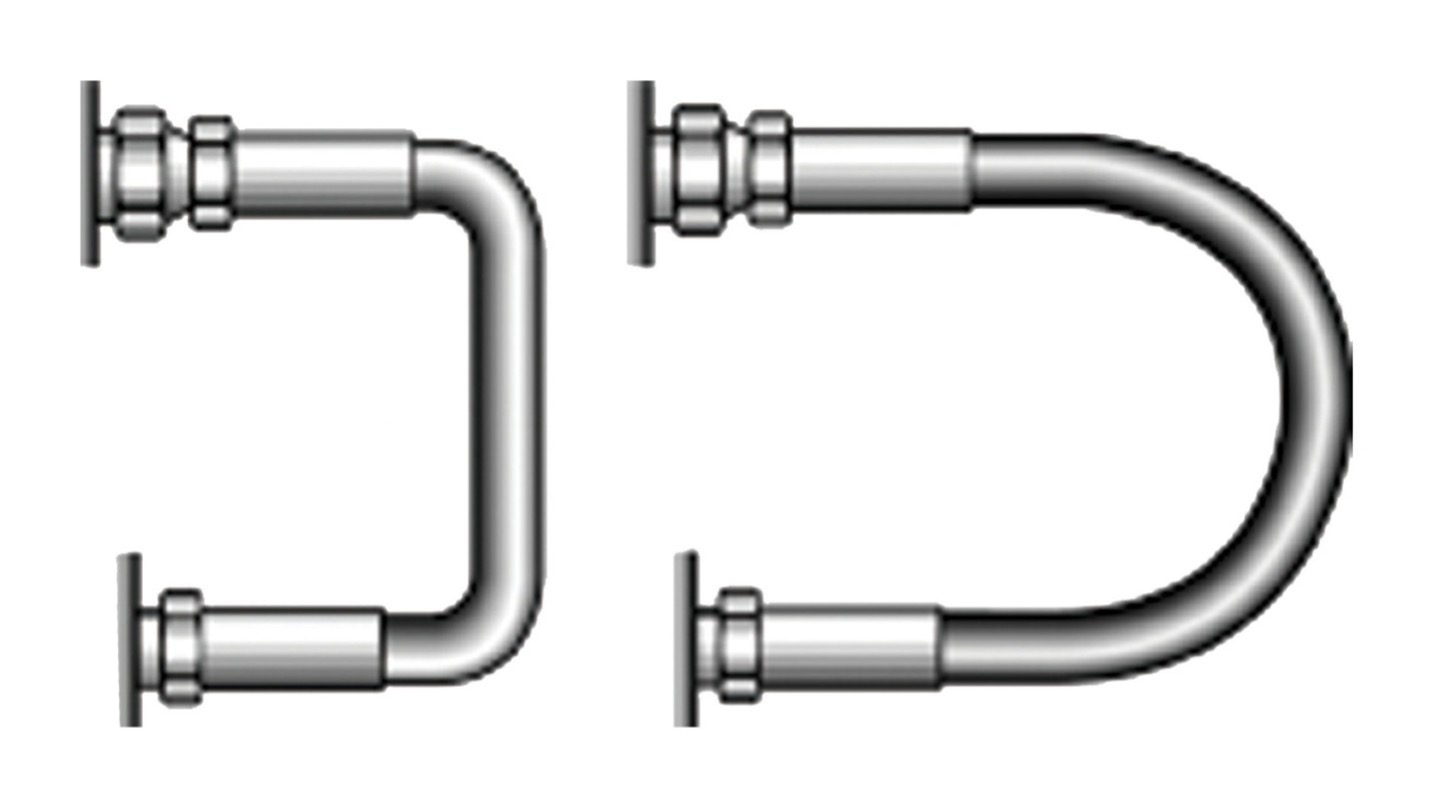
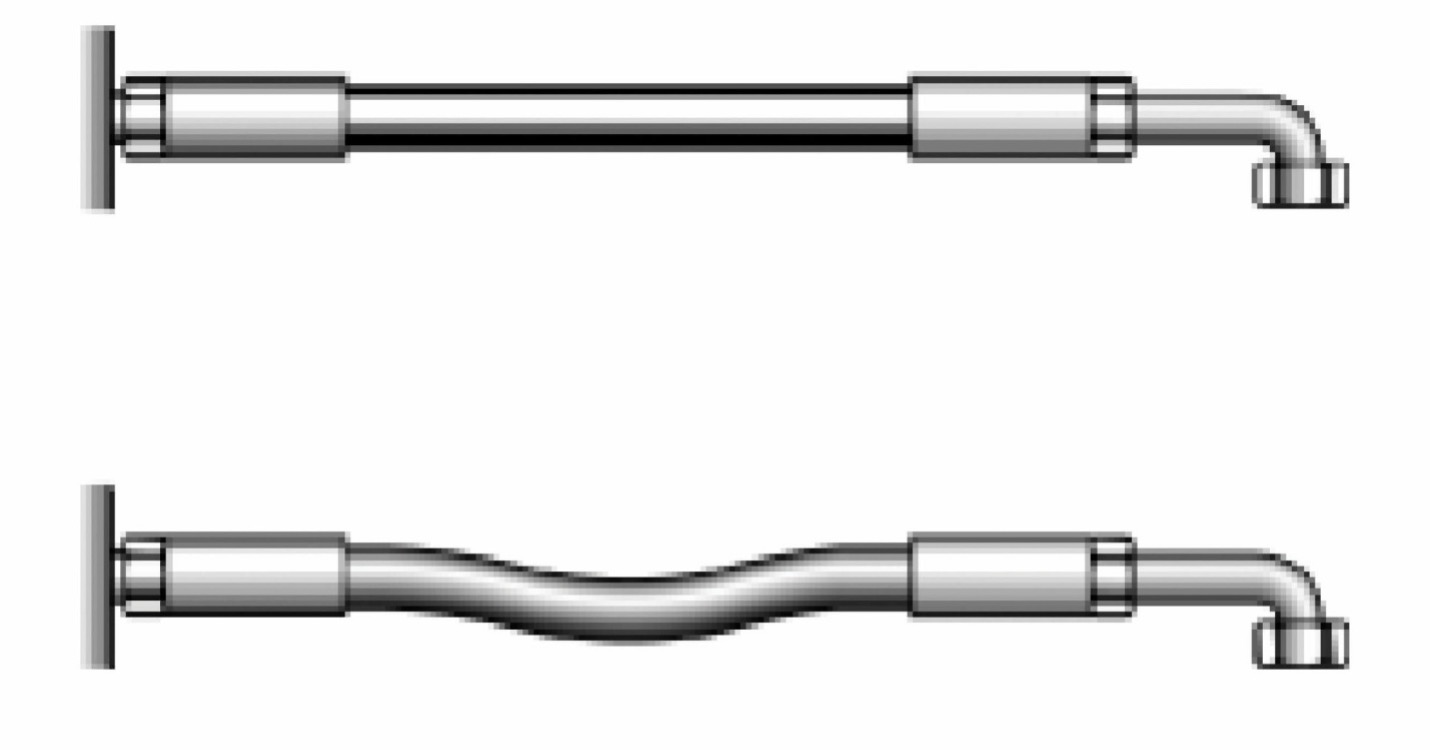
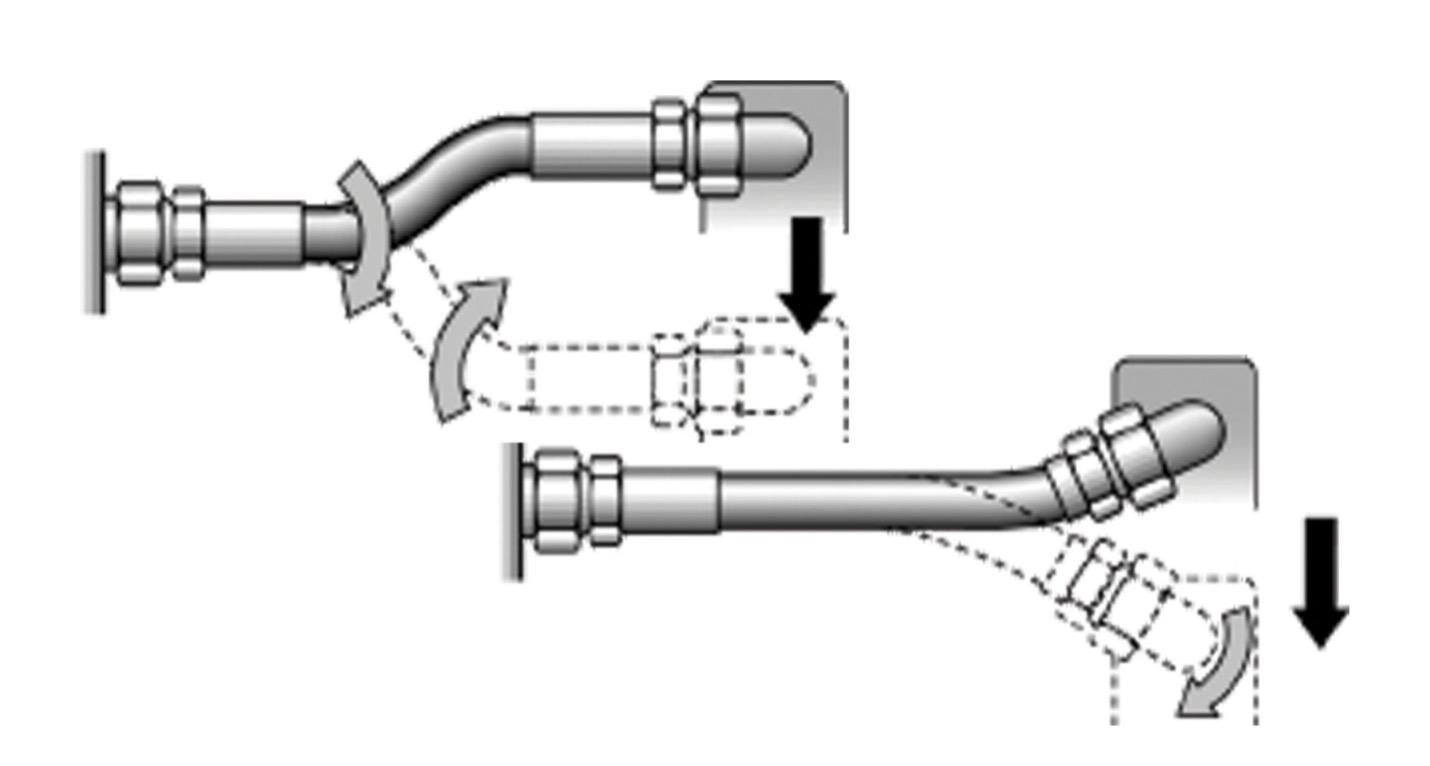
In the left picture, the hose is too short not allowing the hose to have the proper bend radius. This causes strain on the crimp joint. The right picture shows the correct hose length providing correct bend radius. If the hose must bend, it should only bend in one plane. Angle fittings and adapters can be used to achieve this. As a rule of thumb, 2” of hose should be allowed at the end of the hose ferrule before a turn is introduced in the hose. This maintains a stable area for the hose fitting crimp area and promotes extended hose life.
Hose Routing
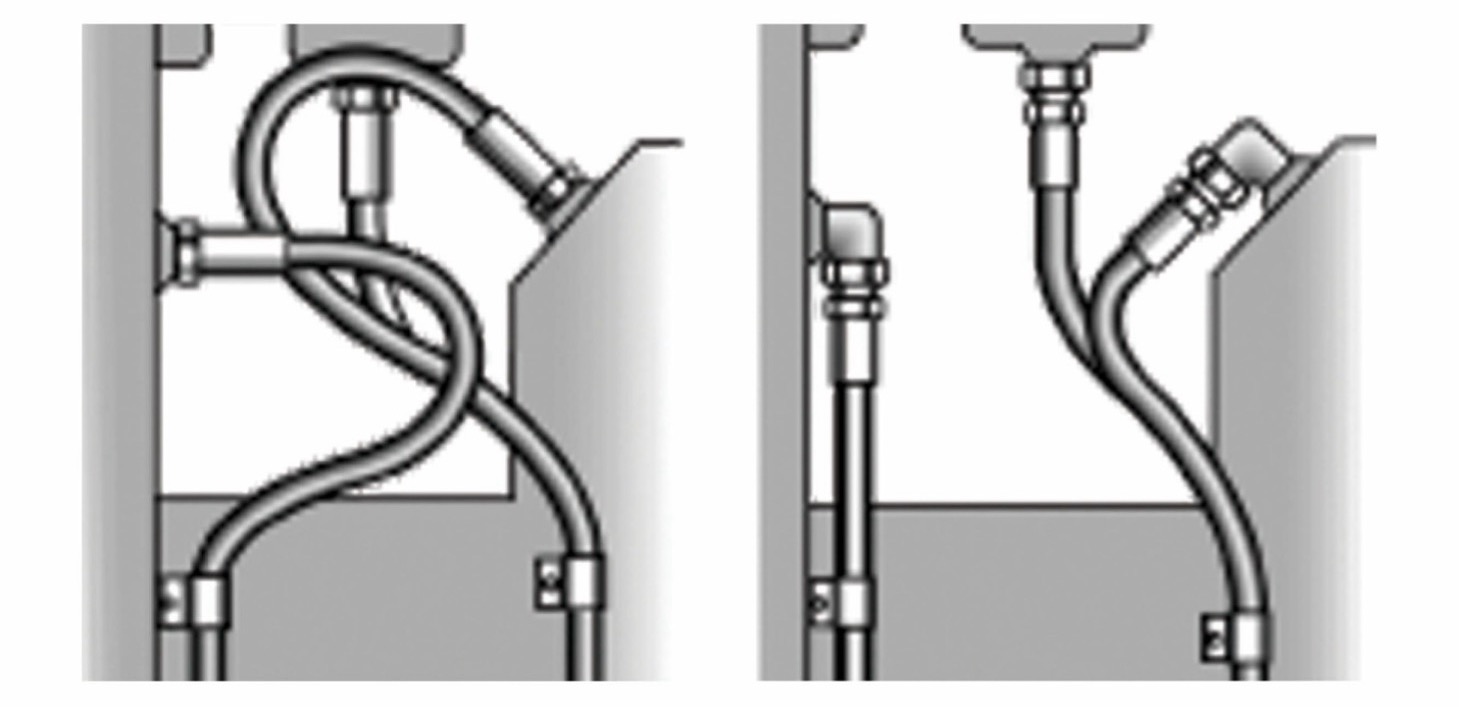
The left picture shows a cluttered hose routing that could induce unnecessary hose wear. The right picture displays a better choice of routing. The use of adapters helps clean up the routing, which allows for longer hose life and allows room for any necessary maintenance.
Torsion
Be aware of hose routings that have torsion and twisting involved. Hoses should be routed to limit this torsion as it can have a negative effect on the crimp integrity and hose reinforcement which can greatly reduce hose life.
A good tip to help identify this issue is to look at the hose layline (printing). If there is torsion in the hose, the hose layline will appear twisted. Torsion can shorten hose life.
Hose Slack
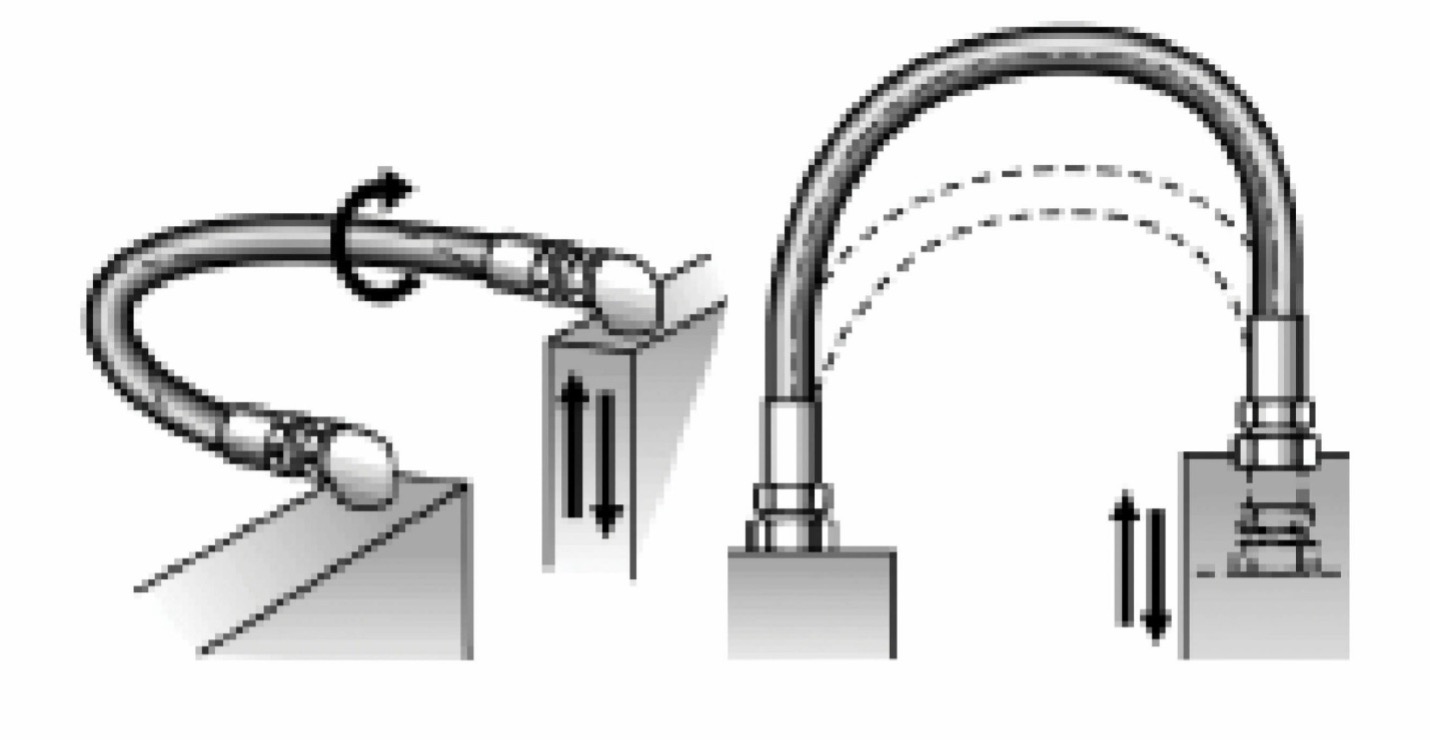
The top hose is too taught. When routing hydraulic hose, make sure there is a gentle bend in the hose. This will allow for the hose to flex, contract, and expand safely during use.
Clamps
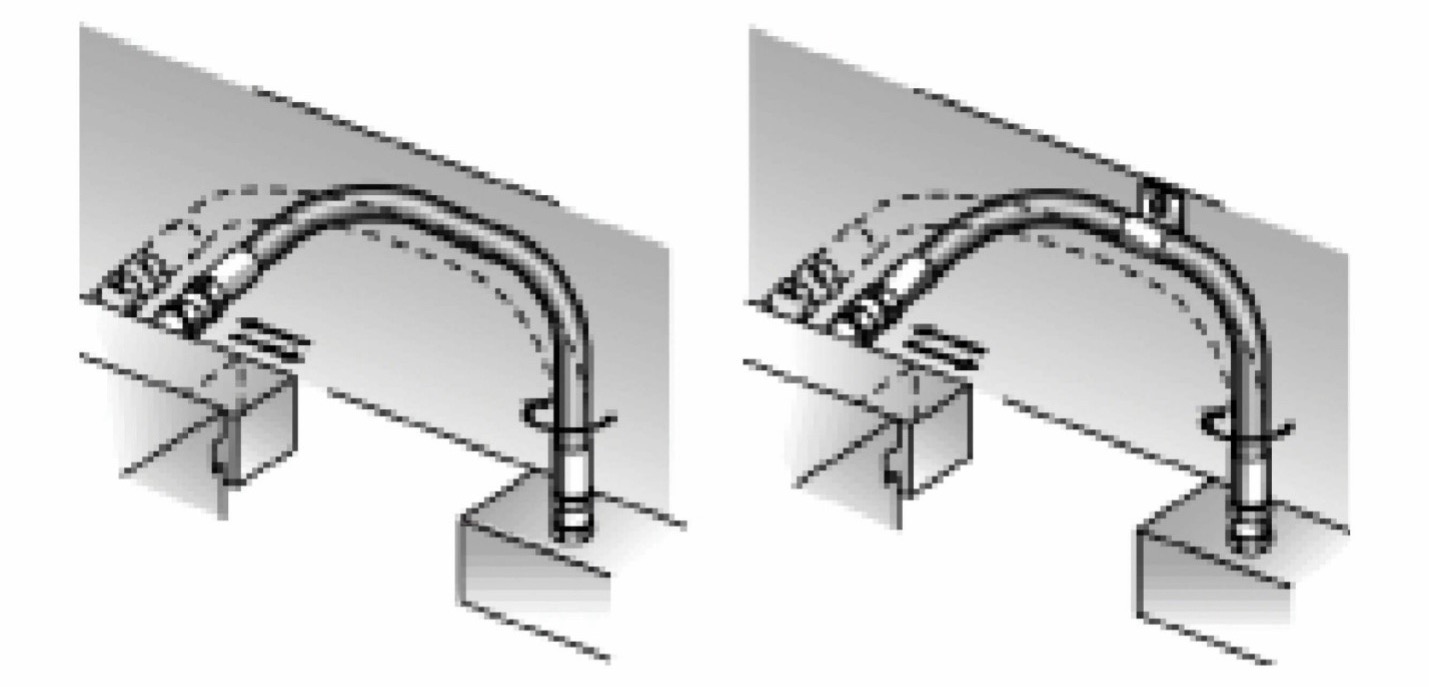
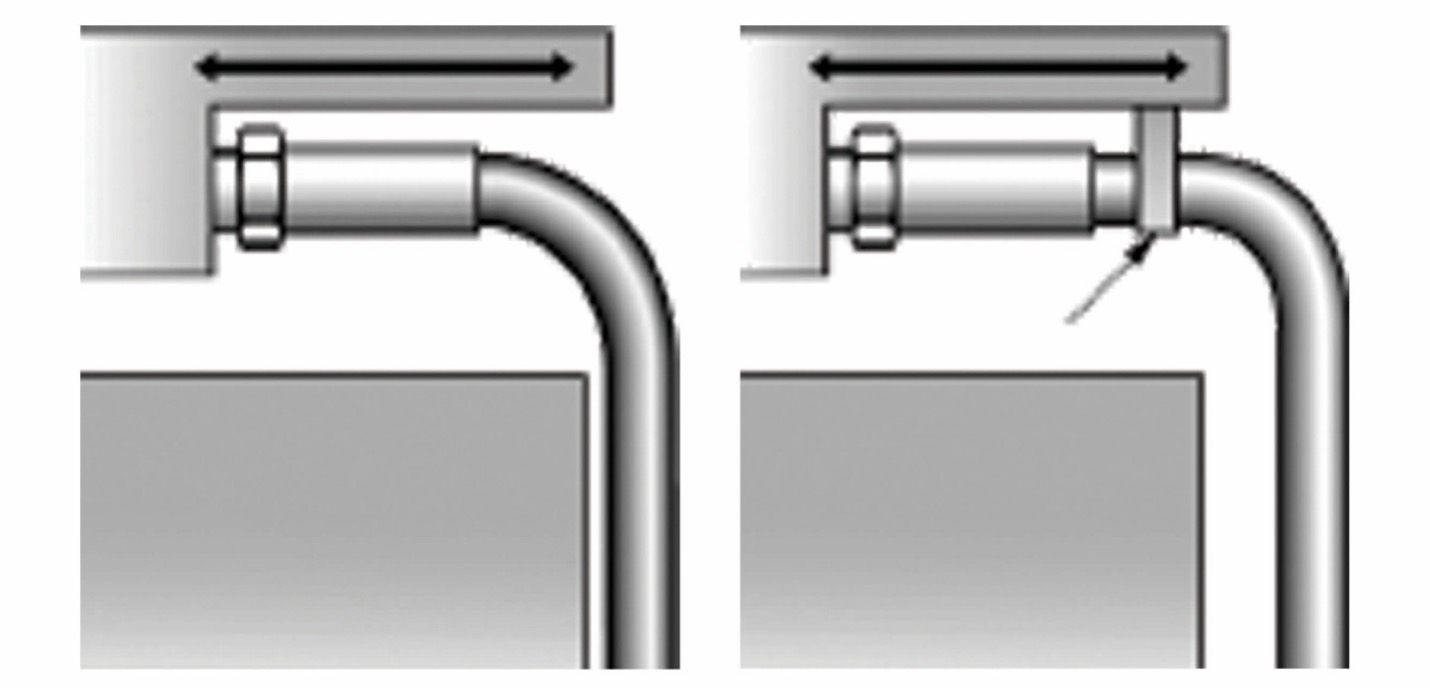
The proper use of clamps can help relax the hose when there is movement in more than one plane. Correct clamp selection and installation is important; incorrect application can cause damage to the cover of the hose, limiting hose life. There must also be length on either side of the clamp to provide enough room for hose movement.
Support Clamps
Support clamps are a good tool to use when trying to limit hose wear-and-tear due to abrasion. Clamps can be used to isolate hoses and hold them away from abrasive surfaces or environments.
Hose Movement
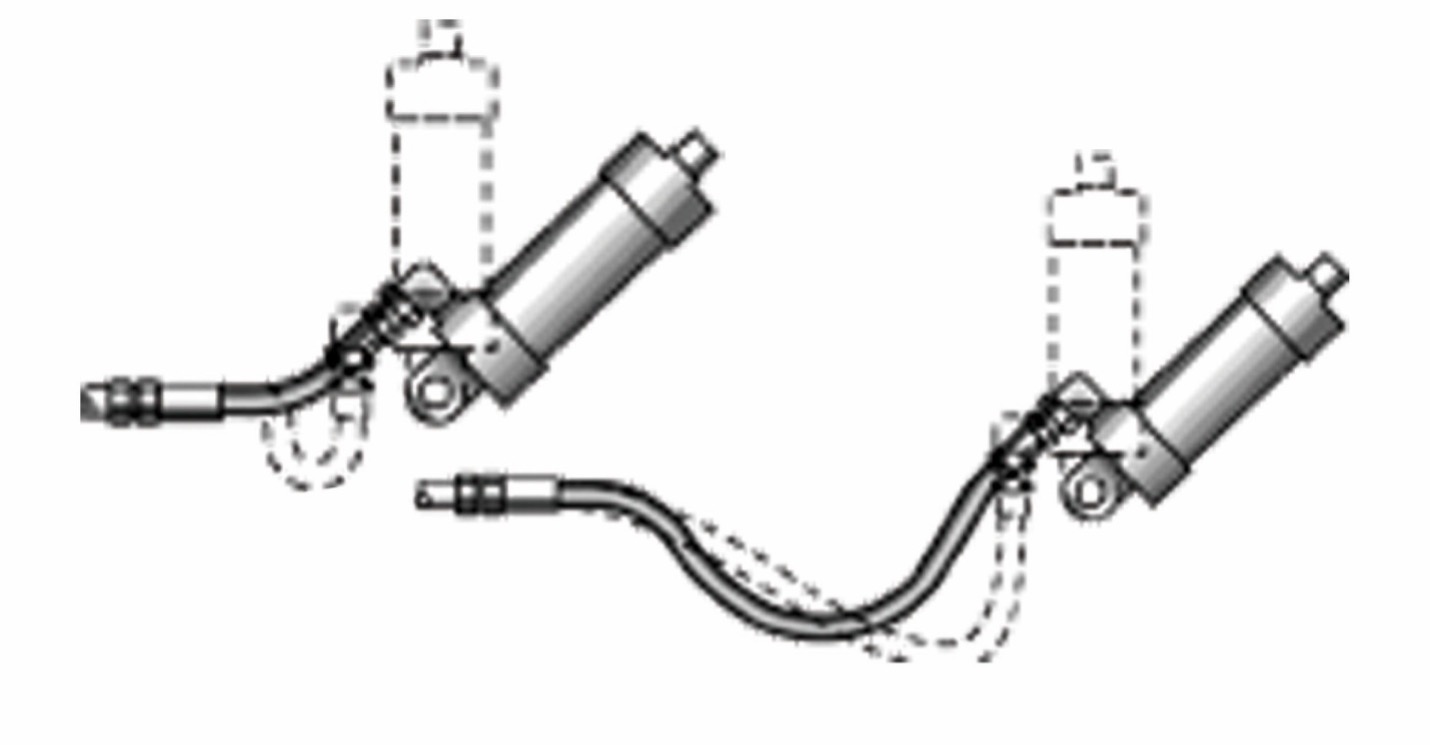
When routing hose, you must consider how the hose will move in the system. No part of the hose’s movement can exceed the hose bend radius or cause stress at the crimp joint. Both outcomes can shorten hose life and lead to premature failure.
Fittings
Choosing the correct fittings for the hose can improve hose life. In this case, swivel ends are used to limit torsion in the hose. Swivel ends can also aid in maintenance and replacement.
Take the Guesswork Out of Hydraulic Hose Routing. Partner with ProPulse!
At ProPulse, we understand the importance of correct hose routing for equipment manufacturers. Hose failure can cause severe issues in your agricultural, construction, utility, or material handling equipment. That’s why we prioritize quality in our manufacturing processes to ensure consistent performance and reliability from our hydraulic hose.
Warning: This product can expose you to chemicals including lead, which is known to the state of California to cause cancer. For more information go to www.P65Warnings.ca.gov.
Prop-65 Warning
Warning: This product can expose you to chemicals including Nickel, which is known to the State of California to cause cancer. For more information go to www.P65Warnings.ca.gov.
Prop-65 Warning
Warning: This product can expose you to chemicals including carbon black, which is known to the state of California to cause cancer. For more information go to www.P65Warnings.ca.gov.
Prop-65 Warning
Warning: This product can expose you to chemicals including Toluene, which is known to the State of California to cause birth defects or other reproductive harm. For more information go to www.P65Warnings.ca.gov.
Safety Warnings
Improper selection or improper use of hose, fittings, assemblies, or related accessories (“Products”) can cause death, personal injury and property damage. Possible consequences of failure or improper selection or improper use of these Products include but are not limited to:
Fittings thrown off at high speed
High velocity fluid discharge
Explosion or burning of the conveyed fluid
Electrocution from high voltage electric power lines
Contact with suddenly moving or falling objects that are controlled by the conveyed fluid discharge
dangerously whipping hose
Contact with conveyed fluids that may be hot, cold, toxic or otherwise injurious
Sparking or explosion while spraying paint or flammable liquids
Injuries resulting from inhalation, ingestion or exposure to fluids
Before selecting or using ProPulse Products, it is important that you read and understand the following:
If you see “It” – Stop “It”
Failure to properly repair or replace hose after exposing braid or the reinforcement layer can cause death, personal injury, and property damage. Like each strand in a bridge cable, each reinforcement fiber plays an exact role in the ultimate burst strength of the hose. A minor slice or nick in the reinforcement can result in total hose failure.
The age of the hose does not matter! It is unfortunate, but even hose used one time can be damaged in severe applications. These hose must be immediately removed from service.
Hose Basics:
Never exceed the maximum working pressure
Never exceed the maximum working temperature
Never apply pressure to a damaged hose
High pressure hoses are designed to use specific fittings or tooling. Never use a different brand of fittings or tooling. Failure to do so can cause death, personal injury, and/or property damage.
A kinked, crushed, or blistered hose will eventually fail- do not risk injury. Immediately repair or remove hose from service.
Follow the pump/equipment manufacturers instructions for pressurized hose testing.